Crocheted Hat RFQs: Record the Openwork Pattern
What should a crocheted hat pattern reference include? Identify the offered hat, mark the crown, side and lower-edge regions, and request a supplier reference for the underlying openwork structure. Link that reference to a sample shown in an agreed condition. Record the visible pattern decision separately from the sequin-decoration decision so that an attractive catalogue image does not become an incomplete construction specification.
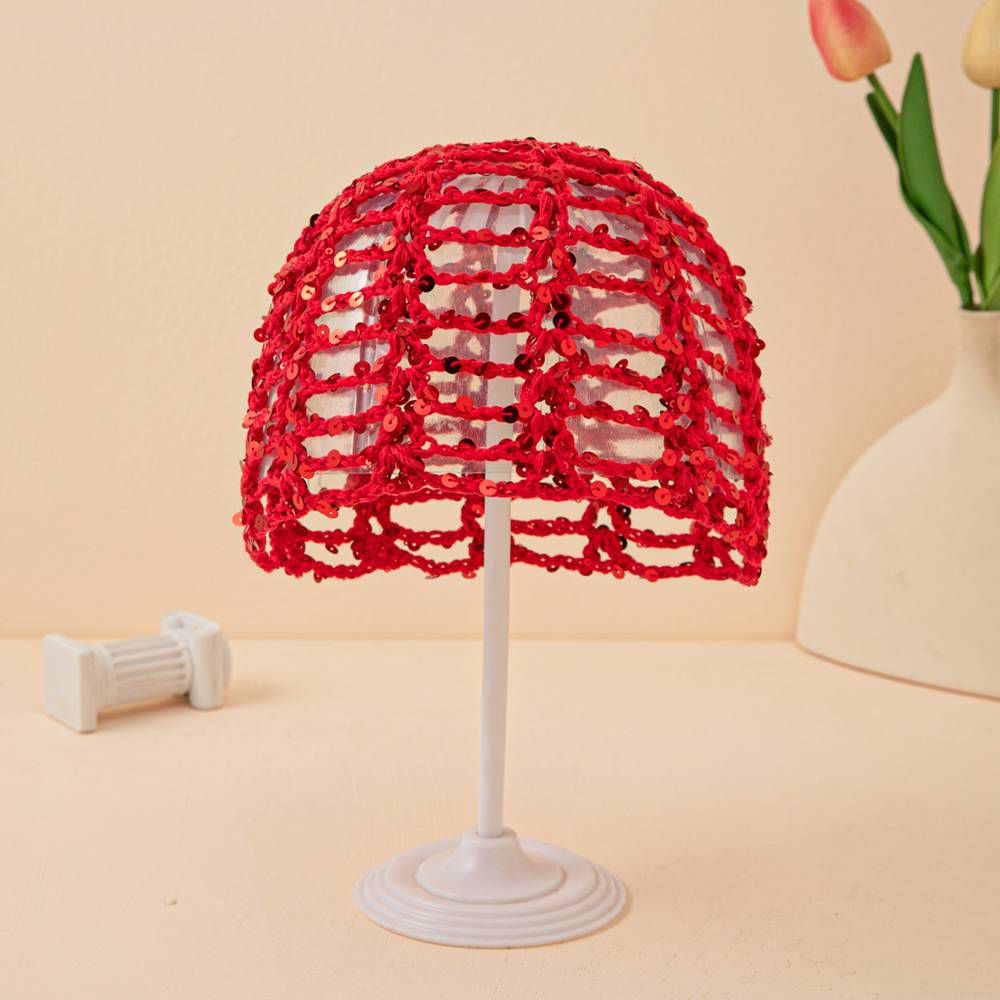
Official Crocheted Hat 1 red gallery reference. Use the visible open structure to request the supplier pattern reference for the offered version.
Identify the underlying pattern in the offer
Yuehong Apparel lists Crocheted Hat 1 in its Hand-Crocheted Hat category. The official gallery shows hats displayed on stands, with open looped sections and reflective decoration. The written catalogue identifies the product, but it does not supply a complete region-by-region reference for the crochet structure visible beneath the decoration.
For a wholesale hand-crocheted hats enquiry, ask the supplier to identify the proposed article and the sample or reference that represents it. Keep an alternative pattern under a separate reference even when it shares a catalogue page. A picture of another specimen should not silently replace the version against which the buyer is making a decision.
This purchasing task defines the underlying openwork appearance. It differs from approving the named sequin trim, its placement or its attachment. Those decoration questions can be recorded separately, while the supplier and buyer agree which structural pattern the proposed hat is intended to show.
Buying field
Requested supplier response
Offered article
Supplier reference and the particular pattern version proposed.
Regions
Marked crown, side and lower-edge areas on the same reference.
Pattern information
Supplier diagram or clear views describing the underlying structure.
Sample condition
How the identified specimen is supported and presented for comparison.
Visible decision
Agreed pattern observations and any unresolved region differences.
Revision identity
Which supplier reference and buyer decision accompany a change.
Use marked regions rather than a single overall image
Begin with a complete view and identify the areas to which each question refers. Mark the crown separately from the side and the lower edge, using simple labels on the reference. This gives the supplier a clear way to connect a close view or explanation with the part of the hat that the buyer means.
Ask whether the offered structure changes between those regions. If the supplier proposes a transition, request a view or diagram showing how the relevant sections relate. Keep an unshown part visible as an open question instead of filling it from another hat that looks broadly similar.
The displayed gallery hats make the open structure easy to locate, but a front view cannot define every side or the crown junction. Request the missing reference needed for the actual proposal. This can make the sample conversation specific without guessing a stitch name or treating partially hidden loops as a complete construction drawing.
A separate physical gallery specimen has different loop and disc positions. It does not define a confirmed colour assortment or a numerical pattern specification.
Agree how the sample will be presented
Identify the physical sample before comparing the pattern. Agree how it will be supported or laid out for the intended appearance review, and keep that condition with the reference images. A hat displayed on a stand and a loose specimen on a table may present the same underlying structure differently.
Ask the supplier which sample condition the proposed pattern reference represents. If a close view was taken while the fabric was held or spread, keep that context visible. Do not derive a numerical opening size or stitch density from a photograph when the relevant measurement reference has not been agreed.
Where the order needs numerical construction information, request it directly from the supplier with its applicable region and stated basis. Keep that information separate from the visual observations. The catalogue gallery supplies useful appearance evidence, while the missing specification still needs an answer for the particular offered version.
Record a practical pattern decision
Compare the identified sample with the marked reference region by region. Record which areas were actually visible and which supplier information was used. State any discrepancy in direct terms, such as a region that does not correspond to the supplied pattern view or a transition for which no clear reference has been provided.
Ask the supplier to explain a difference against the same marked image or diagram. Keep a proposed alternative distinguishable from a correction to the selected version. This helps the buyer understand whether the original reference is still being offered or whether a new sample decision is required.
Keep claims about breathability, protection, strength or another performance property outside this visual pattern decision unless an appropriate assessment is separately agreed. Open spaces in a photograph do not establish a performance result. A clear appearance record should say what was reviewed without turning the visible structure into an unsupported benefit.
The grey gallery specimen supplies a comparison view. Confirm the underlying crochet pattern separately from approval of the sequin decoration.
Keep pattern and decoration versions connected
Retain the offered article reference, marked region views, supplier explanation, sample identity and limited buyer decision with the quotation. Identify the underlying pattern version alongside the separately approved decoration reference. This allows another purchasing contact to see which combination the proposal actually represents.
If the supplier changes the underlying structure, ask which regions and references are affected. Keep the new diagram or sample distinguishable and record the resulting decision. A change of pattern should not be absorbed into an old decoration approval simply because the visible trim has a familiar appearance.
Use the same discipline when an alternative catalogue appearance is selected. Ask which existing references still apply and which information needs to be provided again. The result is a usable purchasing record for the offered hat, while fibre declarations, finished-care requirements and order quantities remain in their own documented scopes.
Buyer FAQ
Does a product photograph define every crochet region?
Use it to locate the enquiry, then request the crown, side and lower-edge references needed for the offered version.
Is approving sequin trim the same as approving the openwork pattern?
They describe different features. Keep the underlying structure and the decoration references distinct and identify the offered combination.
Can opening dimensions be read directly from the image?
Request the supplier values and the applicable region and sample condition. An unscaled photograph is not a complete dimensional specification.
Does the visible open structure prove breathability?
No performance result is established by the appearance reference. Agree any required assessment and evidence separately.
What belongs with a revised pattern proposal?
Keep the changed regions, supplier reference, identified sample and buyer decision together under a distinguishable version.
Start with the Crocheted Hat 1 product reference, request the offered openwork reference, and read the hat purchasing blog for separate supplier-specification topics.
Identify the offered hat and mark the structural regions.
Agree the sample presentation and supplier pattern reference.
Keep the limited pattern decision separate from trim and performance approvals.
wholesale hand-crocheted hatsB2B supplier sample record