Bouclé Beanies: Specify the Turned-Up Cuff
For a turned-up beanie cuff RFQ, identify the offered hat and ask whether the cuff is fixed or intended to be unfolded. Specify the delivered fold state, cuff-height measurement and overall-hat measurement separately. Request a matching sample reference; a catalogue fold and a packaging-size field do not define those dimensions.
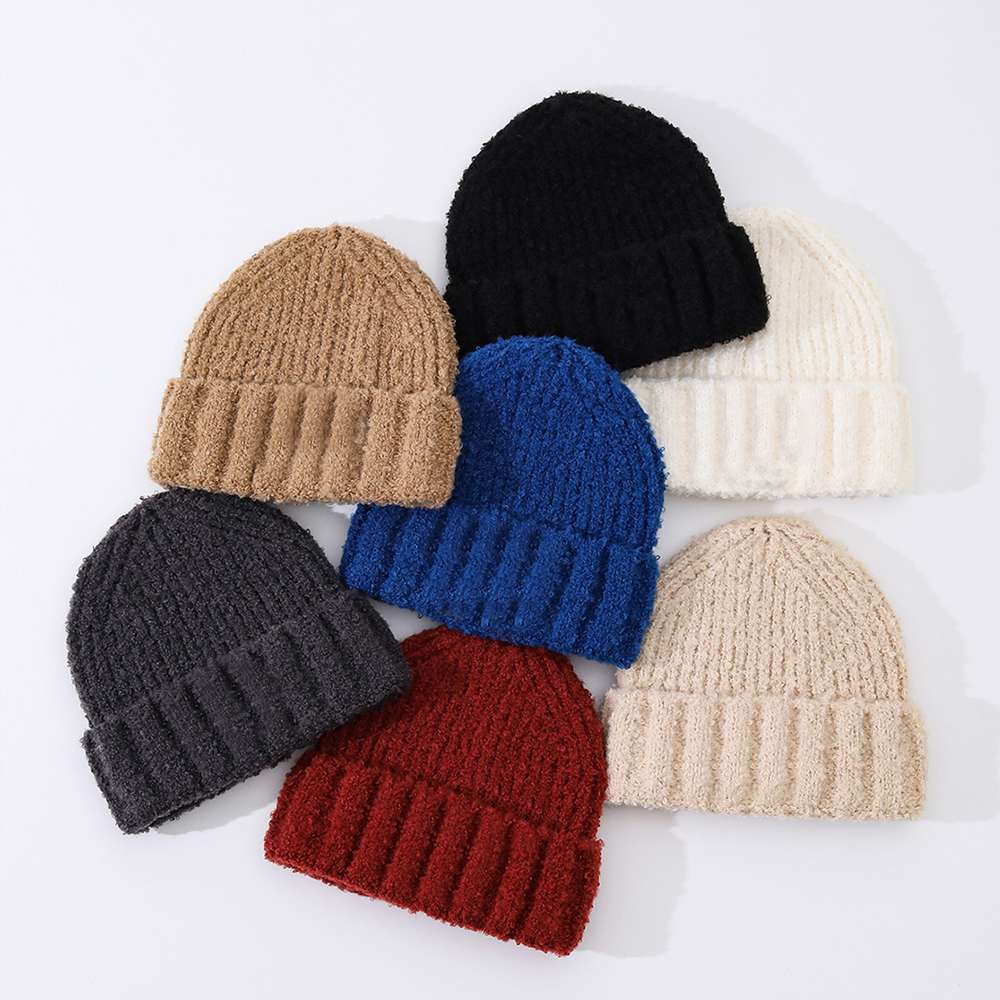
Official Knitted Hat–2 reference. The visible cuffs identify the feature to specify; the photograph does not confirm a fixed fold, cuff height or colour assortment.
Start with the new hat’s visible cuff reference
Yuehong’s Knitted Hat–2 page identifies Bouclé Yarn, a 56–58 cm size field, a washed process and a unit weight of 120g. Its official catalogue image shows textured beanies with turned-up cuffs. The page does not provide the cuff height or explain whether that fold is fixed as part of the offered construction.
For wholesale adult knitted hats, turn the visible cuff into a clear specification question. Ask what condition the supplier will deliver and how the relevant dimensions are measured. This keeps the buyer’s sample discussion focused on the actual hat rather than treating one styled fold as an agreed manufacturing detail.
Confirm whether the fold is fixed or movable
Ask the supplier whether the offered cuff is secured in a stated position or intended to be unfolded. If a connection holds it in place, request its location and description. If the fold is movable, ask how the supplier identifies the normal delivered fold state. These are alternatives for clarification, not features established solely by a front photograph.
Where more than one cuff version is offered, give each its own reference. A buyer should be able to distinguish a different construction from a different way of styling the same sample. Request a matching inside or side view where needed, with the supplier identifying which offered version it shows.
Cuff field
Supplier response requested
Specification purpose
Fold construction
Fixed or intended to unfold
Identify the offered version
Delivered state
Number and position of folds, as applicable
Describe what the buyer receives
Cuff height
Marked measurement points and condition
Compare the visible turned-up section
Overall hat height
Separate folded or unfolded reference
Avoid mixing different dimensions
Locate the cuff-height measurement
Ask the supplier to mark the cuff-height measurement on the product reference. Identify the lower edge and the top of the turned-up area used for its response, along with the condition of the hat during measurement. A dimension without those reference points can be interpreted differently by the supplier and the buyer.
If the visible cuff height varies around the sample, ask how the supplier records that feature. Keep its method and any proposed acceptance requirement with the sample reference. Do not invent a tolerance from the photograph or flatten the product in a way that differs from the agreed measurement condition.
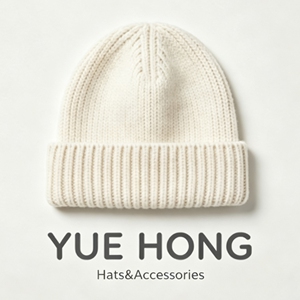
Separate listing: Knitted Hat–1. Its different presentation is category context; its material declaration and dimensions should not be applied to Knitted Hat–2.
Keep overall height and packaging dimensions separate
The Hat–2 page lists individual packaging dimensions of 24×22×2 cm. That field describes the supplier’s packing reference; it is not a finished-hat height specification. Ask for the hat’s overall measurement separately, with the delivered fold state identified. If an unfolded measurement is relevant and the construction permits unfolding, request that as another clearly labelled value.
Likewise, the catalogue’s 56–58 cm size field does not define the height of the cuff. Keep head-size information, cuff height and overall height in separate fields. Each answers a different purchasing question and needs the appropriate supplier explanation rather than a number borrowed from another part of the page.
Approve a sample in the stated fold condition
Ask the supplier to identify the sample used to demonstrate its proposed cuff specification. Request the front, side or inside views needed to understand that response. The buyer can then compare the offered appearance and marked dimensions against the same physical version, without relying on several unrelated colour photographs.
Record whether the decision concerns cuff construction, visible fold height or the complete hat appearance. Keep those decisions distinct from fibre identity, care instructions and fit assessment. For this listing, Bouclé Yarn and Washed remain the supplier’s separate material and process descriptions; neither one supplies a cuff dimension or a measured performance result.
Separate Knitted Hat–1 close reference. A neighbouring product photograph does not establish the quoted Hat–2 cuff construction or finished measurements.
Retain the correct reference for repeat orders
Place the accepted cuff description, marked measurement reference and sample identity beside the quotation. If the supplier proposes a change in fold construction or delivered state, ask for an updated reference. A similar-looking beanie elsewhere in the catalogue should not become the specification for the next Hat–2 order.
The separate Knitted Hat–1 images shown here illustrate that distinction. They are related catalogue products, with their own declarations and presentation. Use them to discuss the range only when clearly identified; do not transfer their material description or dimensions into the Hat–2 cuff response.
Identify the exact offered hat and cuff version.
Confirm the fold construction and delivered state.
Mark cuff and overall-height measurements separately.
Keep the accepted sample reference with the repeat-order specification.
FAQ
Does the photograph show that the cuff is permanently fixed?
It shows a turned-up appearance. Ask the supplier whether the offered fold is secured or intended to be unfolded.
Can the packaging size be used as the hat height?
Keep those fields separate. Request the finished-hat measurement in the stated folded or unfolded condition.
What should identify a useful cuff specification?
Use the hat version, fold construction, delivered state, marked measurement points and matched sample reference together.
Find related sourcing topics in the Yuehong blog, or send the cuff-specific enquiry with your intended product requirements.
wholesale adult knitted hatsturned-up cuffsKnitted Hat2