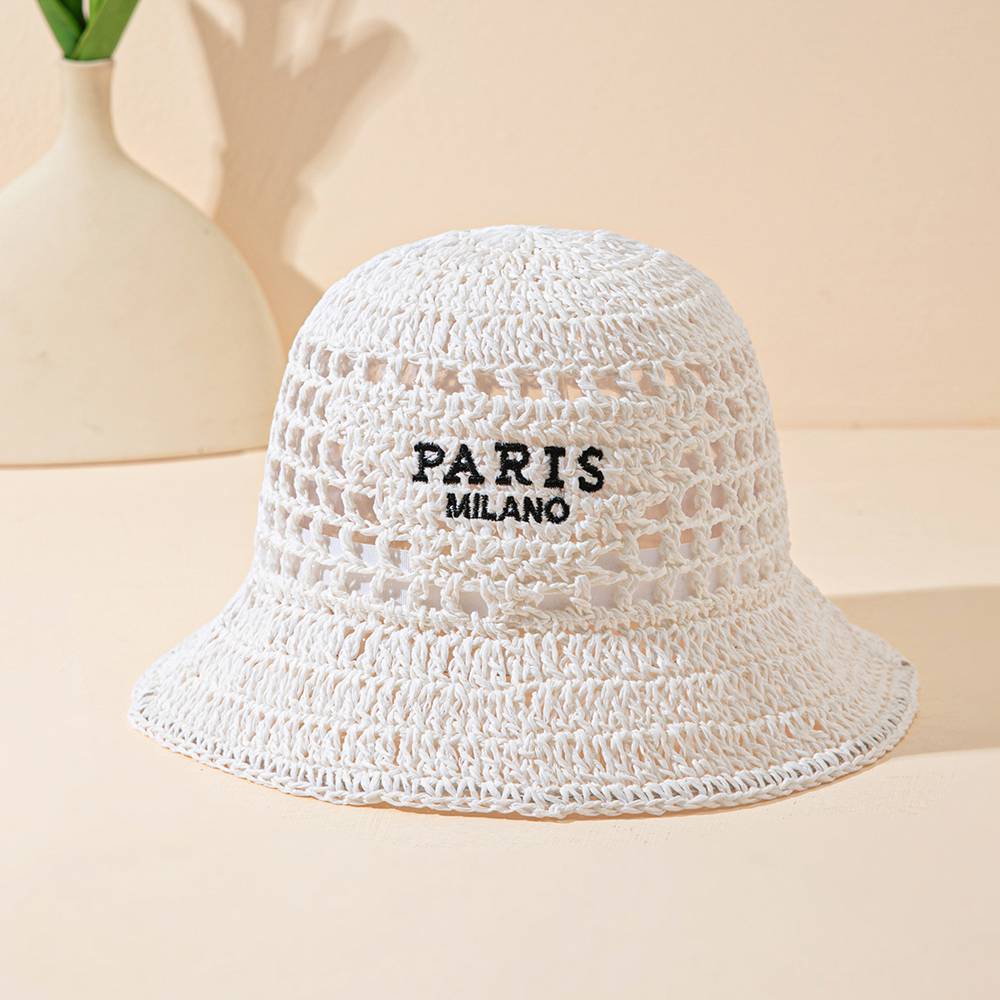
When a straw hat listing gives a 100-unit MOQ and a 200-unit carton quantity, ask the supplier how the proposed order will be packed. Confirm what the minimum applies to, which colours count toward it and the actual carton arrangement quoted. Yuehong Apparel publishes those two quantities for Straw Hat – 1; keep them as separate fields in the RFQ.Read the minimum and packing quantity separatelyA buyer sourcing wholesale straw hats needs an order quantity and a packing proposal. These may be different numbers. Yuehong Apparel’s Straw Hat – 1 page lists a minimum order quantity of 100 units and a carton quantity of 200 units. Put both fields in the enquiry so the supplier can explain how they relate to the order you want quoted.The same product page identifies the material as Paper, gives a size of 56–58 cm and describes the colour as “As shown.” These details help identify the actual hat. Start with its URL and requested quantity, then ask for a quotation that states the applicable minimum and the packing arrangement for that proposal.Confirm what the 100-unit minimum applies toAsk whether the catalogue minimum applies to this design, each quoted colour, a particular specification or the total proposed order. The answer matters when a buyer wants an assortment. A total of 100 hats divided between several appearances is a different request from 100 hats in one identified colour.Give the supplier a proposed allocation rather than asking only whether mixed colours are possible. List each requested colour reference and its quantity, then ask the supplier to mark which lines it can quote and any minimum that changes the proposal. Keep a revised allocation visible as an alternative so the buyer can compare the actual offer with the original request.Enquiry field | Catalogue reference | Order-specific questionProduct | Straw Hat – 1, Paper | Which offered version does the quote cover?Minimum | 100 units | Per design, colour, specification or order?Carton quantity | 200 units | How will the requested quantity be packed?Colour allocation | As shown | Which references and quantities are quoted?Actual cartons | To be stated for the proposal | How many cartons and hats in each?Request packing for the quantity being quotedFor a proposed 100-unit purchase, ask the supplier to describe the actual packing arrangement. It may need a response different from the catalogue’s 200-unit carton field. Let the supplier state its available arrangement and any conditions attached to it. Keep the quote in units of hats, with carton details listed separately.The page also publishes individual packaging dimensions of 20 × 20 × 1 cm and carton dimensions of 60 × 40 × 35 cm. Ask which quantity and packing configuration those figures describe. If a proposed order uses different packing, request the corresponding dimensions and carton count for that offer rather than carrying the catalogue figures into a shipping enquiry unchanged.Make the colour allocation recognisableThe official product images show several appearances. Attach the relevant catalogue reference beside each requested order line and ask the supplier to identify the colour it proposes to supply. A supplier colour code or clearly named sample reference can keep the allocation recognisable when an enquiry moves between purchasing, sales and packing teams.Use a small reference sheet for the white, light neutral and brown catalogue appearances. Put the chosen image beside each requested colour line, then ask the supplier to return its own corresponding reference. Keep unavailable or substituted appearances visible as alternatives rather than silently reallocating their quantities.Keep the commercial boundary clear: the published minimum, carton quantity and photographs are catalogue references, not acceptance of a particular assortment or packing proposal. The lettering on the pictured hats also establishes no brand relationship. Confirm the offered version and allocation in the supplier’s response.Compare quotations on the same order basisAn RFQ can read: “Please quote Straw Hat – 1 for the attached quantity and colour allocation. Confirm what the published 100-unit minimum applies to and explain the actual packing for this proposal against the listed 200-unit carton quantity. Please state the total hats quoted, the number of cartons and the quantity in each carton, with any alternative allocation shown separately.”• Compare prices against the same hat quantity and identified specifications.• Separate packing details from the order’s unit count.• Ask the supplier to identify changes to the requested assortment before acceptance.Send the allocation and product link through the supplier contact page. Buyers comparing wholesale straw hats can then assess the quantities actually offered, including any alternative that changes the size of the purchase or its packing arrangement.Check the quotation totals before acceptanceReconcile the sum of the quoted colour lines with the total number of hats being purchased. Separately reconcile the quantities assigned to the actual cartons with that same order total. Ask the supplier to identify any unit price basis, packing charge or minimum that differs between the proposed and alternative allocation. Leave those commercial fields unanswered until confirmed; the catalogue carton quantity alone cannot supply the missing order-specific calculation.Frequently asked questionsDoes a 200-unit carton mean the minimum is 200?Ask the supplier to clarify. The page gives separate minimum-order and carton-quantity fields.Can colours be combined to reach 100 units?That requires a supplier response to a specified colour allocation.What packing information belongs on the quote?The total hats, carton count, quantity per carton and dimensions for the actual arrangement offered.Product and contact referenceshttps://yhongapparel.com/product/straw-hat-1/https://yhongapparel.com/contact/
Get a Free Quote
Fill in the form and we'll get back to you within 24 hours.
✅
Thank you!
We've received your inquiry and will reply within 24 hours.